
In the realm of corporate risk management, fire safety often focuses heavily on detection systems (sprinklers, alarms) and active suppression (extinguishers). However, statistics reveal that a significant percentage of business fires originate in small, localized areas—kitchenettes, laboratories, or server rooms—where the immediate response in the first 30 seconds dictates the outcome.
For facility managers and safety officers, relying solely on fire extinguishers presents a calculated risk. Mechanical failure, lack of employee training, and the potential for collateral damage from extinguishing agents can complicate emergency responses. This is where the commercial fire blanket becomes a non-negotiable asset in a comprehensive workplace safety strategy.
The Critical Gap in Traditional Fire Suppression
While fire extinguishers are essential, they are not a universal solution for every incipient fire scenario. The complexity of operating an extinguisher—remembering the PASS technique (Pull, Aim, Squeeze, Sweep) during a panic-induced adrenaline dump—can lead to failure. Furthermore, dry chemical extinguishers can destroy sensitive electronics in server rooms or contaminate food preparation areas in commercial kitchens, leading to costly downtime and cleanup.
A fire blanket addresses these specific pain points by offering a “zero-failure” mechanism. There are no pressure gauges to check, no pins to jam, and no complex instructions. It fills the critical gap between the start of a fire and the arrival of professional firefighters.
Why Every Commercial Facility Needs Fire Blankets
1. Zero Training Required for Immediate Response
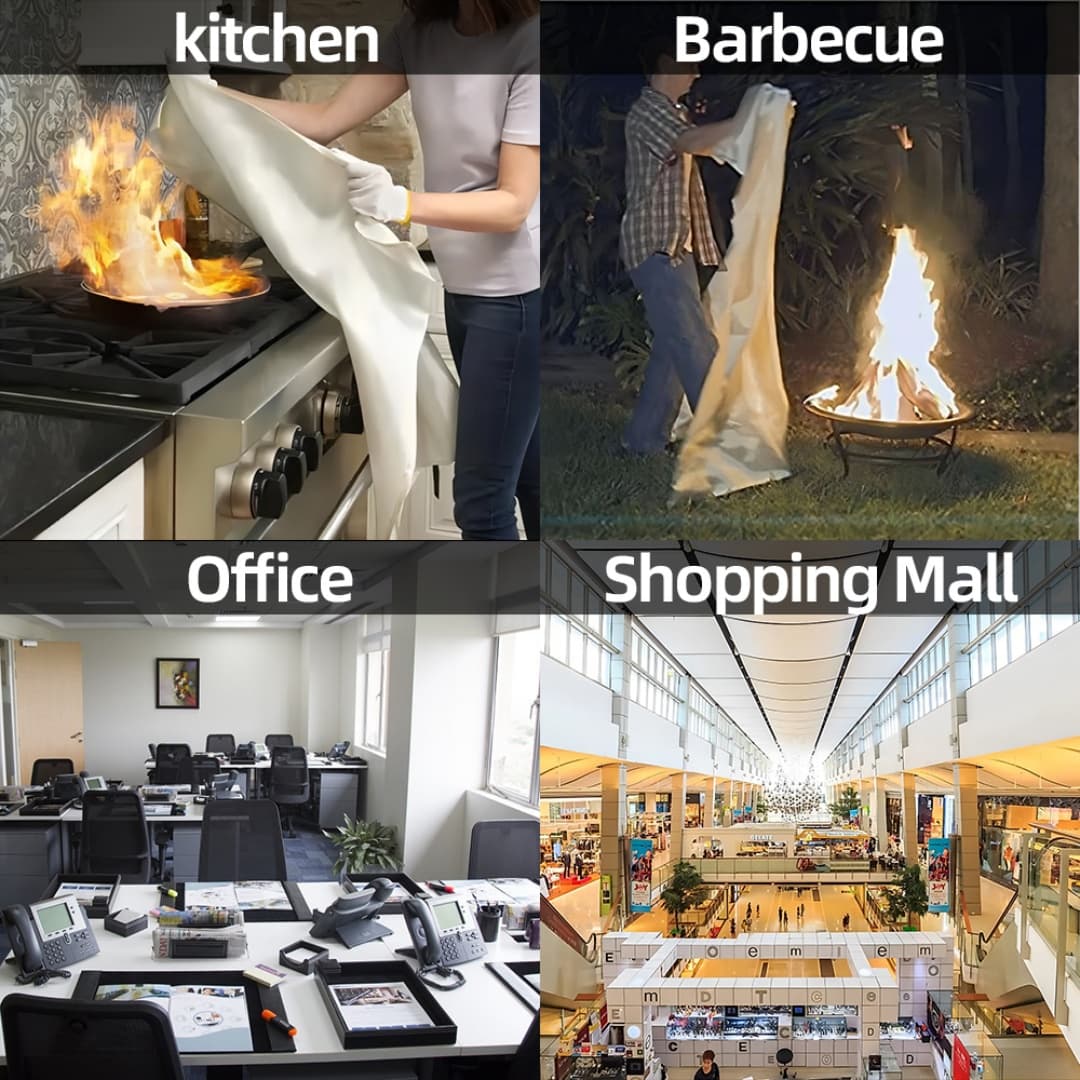
In a corporate environment, not every employee is a trained fire warden. When a fire breaks out, hesitation is the enemy. Fire blankets are designed for intuitive use: pull the tabs and cover the fire. This simplicity empowers any staff member—from the receptionist to the CEO—to act decisively, extinguishing flames before they escalate into a structural threat.
2. Protecting High-Value Assets and Personnel
Beyond suppressing flames, fire blankets serve a dual purpose that extinguishers cannot match: protection.
- Asset Protection: For fires involving small electronics or laboratory equipment, a fire blanket smothers the fire by cutting off oxygen without spraying corrosive chemicals. This preserves the surrounding equipment and allows for faster recovery and business continuity.
- Human Safety: In the event that evacuation routes are compromised, a fire blanket can be wrapped around an individual to shield them from direct flame and radiant heat while escaping. This capability is vital for fleet owners, vehicle safety kits, and high-occupancy office buildings.
Compliance and Standards: What Procurement Managers Must Know
Procuring fire safety equipment is a matter of strict liability and compliance. Not all fire blankets are created equal. Low-quality fiberglass imports that shed fibers or fail under heat can lead to severe legal consequences for a business.
When sourcing fire blankets for commercial use, verification of international standards is mandatory. Procurement managers must look for:
- BS EN 1869:2019: The European standard ensuring the blanket’s performance against cooking oil fires and its flexibility.
- ASTM F 1989: The standard specification for cooking fire suppression blankets.
Utilizing non-compliant products not only endangers staff but also voids insurance policies in many jurisdictions. It is imperative to demand valid, up-to-date test reports from suppliers.

The Factory Direct Advantage: Quality Assurance & Cost Control
For B2B buyers, the supply chain is as important as the product itself. Sourcing fire blankets through general trading companies often obscures the origin of the materials, leading to inconsistencies in fiberglass quality and weaving density.
Partnering directly with a specialized manufacturer (Factory Direct) offers distinct advantages for enterprise clients:
- Traceability and Testing: A reputable factory, such as Huarui, controls the entire production process from fiberglass weaving to silicone coating. This ensures that every batch meets specific fire resistance ratings and passes rigorous third-party testing.
- Customized Storage Solutions: Commercial environments vary. A factory can provide customized packaging—from hard cases for wall mounting in workshops to soft PVC bags for fleet vehicles—ensuring the blanket is stored correctly and accessible instantly.
- Cost Efficiency: Eliminating middlemen reduces procurement costs, allowing businesses to equip every critical zone (kitchens, labs, vehicles) without exceeding the safety budget.
Conclusion
Fire safety is not just about meeting the minimum legal requirements; it is about ensuring business continuity and protecting human life. The fire blanket represents a low-cost, high-reliability investment that mitigates risks where other tools fail.
By integrating high-quality, compliant fire blankets into your safety protocols, you provide your workforce with the confidence to handle emergencies effectively. Don’t wait for an incident to expose the gaps in your safety plan.